Implementing the 5S concept using Lean Management and MES – How to do it?
The 5S method is inextricably linked to the Lean Management concept. What is it, and how can it help manufacturing companies? Why is this principle so important in the context of lean management, and what does it have in common with the MES system? Learn step by step how to implement 5S in a manufacturing company and why you should do it at all.
Production Routing – What Is It and How Does It Work?
Production routing is a key concept in manufacturing, enabling scalability and efficiency in goods production. What does it involve, why is it critical for production effectiveness, and how can IT systems be used to optimize it?
MES System in the Furniture Industry – Is It Worth It?
Fluctuating demand, diverse customer preferences, and ever-changing design trends – these are the challenges that furniture manufacturers face every day. To meet them and maintain a competitive position, it is essential to use innovative and flexible solutions. Implementing an MES system in the furniture industry may prove to be a bullseye decision.
Digital Factory – Plan Your Path to Industry 4.0 with a Digital Transformation Roadmap
The use of new technologies is now essential for a company to grow and remain competitive. How can you effectively carry out a digital transformation and turn your manufacturing plant into a modern factory aligned with Industry 4.0?
Four Stages of Building a Digital Transformation Roadmap according to ImFactory
How to carry out Digital Transformation? This question often keeps managers of manufacturing companies awake at night. The increasingly widespread use of new technologies and the visible trend towards Industry 4.0 mean that, if you don’t want your company to fall behind, investing in digitalization is essential. The problem is that it’s not so simple, and it’s often unclear where to start.
Planning and scheduling are two key processes in enterprise production management. What is the difference between them? What role do they play, what is important for each of them, and how can an ERP system support them?
For effective and efficient operation of production facilities, production planning and scheduling are essential. The differences between them are significant, and although it might seem at first glance that these processes proceed similarly, it is worth knowing exactly what each of them involves. Comprehensive planning and scheduling can be further facilitated by using modern IT systems.
What is production planning?
Production planning is a management process that aims to effectively organize production processes in an enterprise in such a way as to achieve the established operational and strategic goals.
The scope of planning includes forecasting how many products will be needed on the market, and then, based on available resources such as raw materials, employees, machines, etc., determining how many products should be manufactured in a given period.
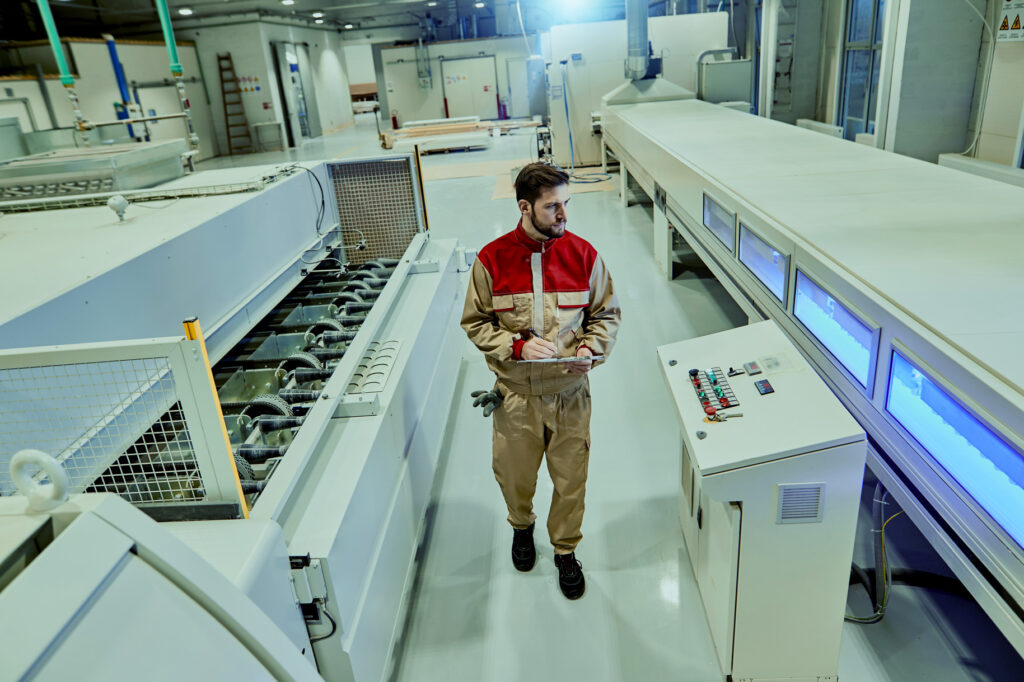
Production planning focuses mainly on how many products should be manufactured in a given period (Freepik)
The production planning process is not static. It is necessary to regularly monitor progress and changing market conditions. If necessary, the production plan should be adjusted accordingly, taking into account changes in demand, resource availability, or other unexpected events.
The goal of production planning is to achieve efficiency, minimize costs, and maximize productivity. This process continues cyclically, allowing the company to adapt to changing market conditions and optimize production processes.
What is production scheduling?
Production scheduling is the process of planning and organizing production-related activities to efficiently use resources, minimize time, and achieve set goals.
The main aspects of production scheduling include determining the availability and use of raw materials, machines, employees, tools, etc., as well as setting optimal start and end dates for individual stages.
It is important to determine which orders or products are a priority and which can wait, as well as which tasks are interconnected and how the completion of one affects the ability to start the next.
Production scheduling should be flexible and ready for adjustments to current conditions. It is essential to track production progress against scheduled deadlines. If there are delays or changes in the plan, corrective actions can be taken.
Production planning vs. scheduling – key differences
What are the key differences between production planning and scheduling? Let’s compare these two processes considering various aspects:
Production planning vs. scheduling – goal
The planning process focuses on long-term strategy. It involves setting production goals, determining the quantity and type of products to be manufactured, and creating general production plans for the future.
Scheduling involves creating a specific sequence of actions and deadlines in which individual production tasks should be performed to achieve the established planning goals.
Production planning vs. scheduling – time
Production planning concerns a long-term period, usually covering months or years. In this process, strategic decisions regarding production are made, such as developing new products, purchasing new machines, or increasing production capacity.
Production scheduling focuses on short-term periods, often covering weeks or days. This is where the exact dates and sequence of individual production tasks are determined.
Production planning focuses on a long-term strategy, while scheduling focuses on immediate actions (Freepik)
Production planning vs. scheduling – decisions
Production planning is more general, mainly based on decisions regarding resource allocation, production strategy, demand forecasting, and general production shaping. The result is a production plan or production strategy, usually presented as a document or presentation.
Production scheduling is more detailed. It includes decisions about the sequence of operations, raw material delivery schedule, machine utilization, personnel work planning, etc. The result is a production schedule, often presented in graphical or tabular form, showing specific tasks and their deadlines.
Using an ERP system for production planning and scheduling
ERP (Enterprise Resource Planning) systems are widely used in modern enterprises to manage various aspects of business, including production planning and scheduling. Using an ERP system in the production planning and scheduling process brings many benefits, such as:
Centralized data collection – this facilitates the management of data regarding resources, raw materials, finished products, production processes, customer orders, etc. Thanks to this, preparing a production plan becomes easier.
Material requirements planning – ERP systems often include MRP modules that allow forecasting and planning the demand for raw materials and production components based on customer order data and planned production.
Creating ready-made schedules – ERP systems enable the creation and management of production schedules based on the availability of resources, time, employees, and machines.
Resource management – ERP systems allow for accurate management of resources such as raw materials, warehouses, tools, machines, etc. This helps avoid shortages or excessive inventory accumulation.
Integration with customer orders – ERP system can be integrated with the customer service system, allowing for automatic transfer of orders to the production process and generating schedules based on them.
Department integration – an ERP system integrates various departments of the organization, facilitating cooperation between them and the flow of production-related information.
Summary
Production planning and scheduling differ in timeframe, level of detail, goal, and the type of decisions made. Production planning focuses on long-term strategy, while scheduling focuses on short-term establishment of deadlines and sequences of actions. Together, these two processes help companies efficiently manage production, adapting to both long-term goals and short-term constraints and requirements.
See also
Want to learn more? Visit our Knowledge Base, where you'll find articles and webinars by experts to expand your knowledge.
Check if Digital Transformation is the Answer to Your Company's Needs
Free Consultation
Thank you for submitting the form.
Our account manager will contact you within 1 business day to learn more about your challenges and schedule an appointment with the consultant best suited to your needs.
While you’re waiting, we encourage you to go to ImFactory’s Knowledge Base, where you’ll find many interesting webinars, articles and case studies that will introduce you to the world of Digital Transformation






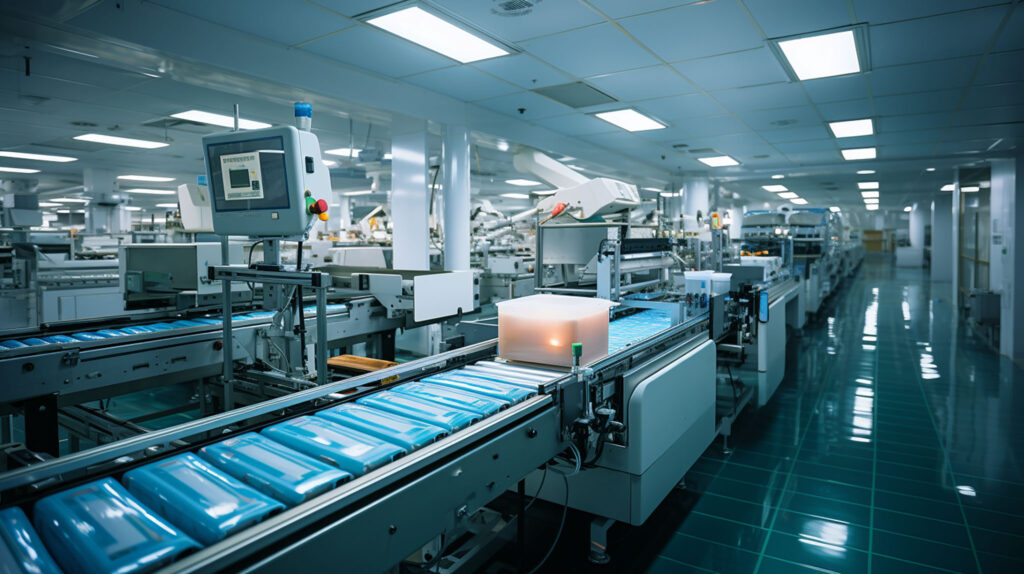
 Production planning focuses on a long-term strategy, while scheduling focuses on immediate actions (Freepik)