Why are Supply Chain Planning system leaders looking to PlanetTogether?
Supply chain management is a complex task these days, requiring consideration of many different elements and the links that connect them. At the same time, it is an extremely important task that has a huge impact on gaining a competitive advantage. What role do APS-class systems play in successfully managing this area? And how does PlanetTogether help global SCP system leaders develop modern tools to optimize processes and build flexible, integrated supply networks for the 21st century?
Which IT systems are worth implementing in a manufacturing company? How do they work, what are their functions and how can they help our business grow? In what order to implement them? Read and organize your knowledge of ERP, MES and APS systems.
Is Planning Production in Excel an Optimal Solution?
The well-known Excel has been used in companies, institutions, and even our households for decades. Simple yet versatile, it has played a key role in the success of many businesses. Using Excel for manufacturing management has streamlined daily operations in numerous factories and helped take significant steps toward improving processes. But in today’s world, are spreadsheets still fit for the 21st century?
Production scheduling can significantly impact not only a company’s daily operations but, more importantly, its financial performance. Success or failure in this area often hinges on the proper arrangement of individual tasks. So, how to plan efficiently? Can it be done using spreadsheets, or is it better to turn to more modern solutions?
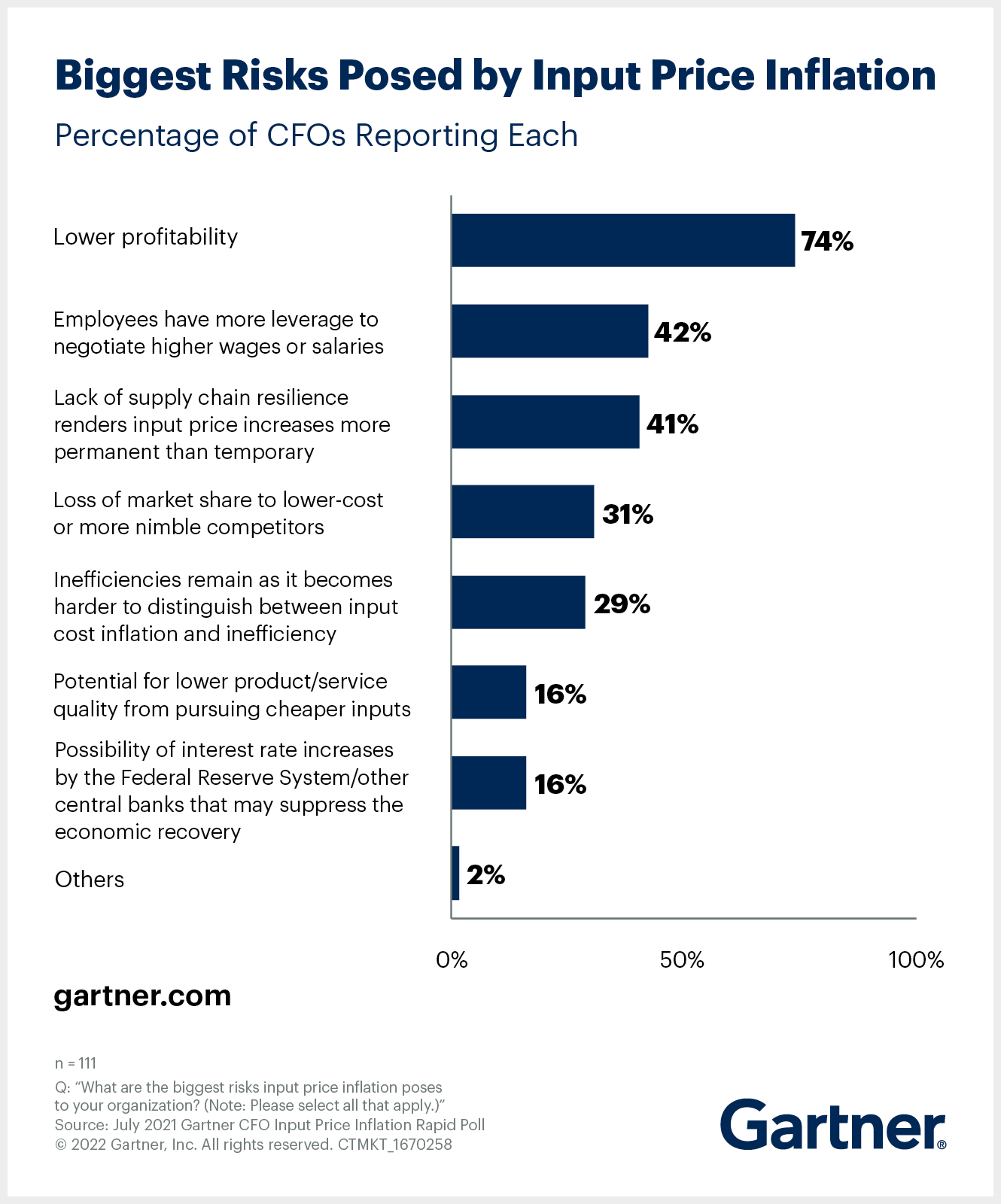
It’s safe to say that hardly anyone today is unfamiliar with the concept of inflation and its profound impact on our lives and our businesses. According to Gartner, a staggering 75% of CFOs identify reduced profitability as the primary risk generated by the rising inflation. The lowered profitability may be caused by not updating prices to match current costs. Many companies struggle to keep track of their Total Manufacturing Cost (TMC), which presents what financial outlay was needed to manufacture an item or a batch, considering the following components:
Material costs based on consumption and batch sizes,
Machinery operation costs,
Labor expenses,
Manufacturing utility costs.
Continuous monitoring of the cost effectiveness of production is not just about safety; it’s also about agility. Surprisingly, nearly one-third of CFOs view agility as a risk resulting from inflation, simply because businesses need to adapt faster than they often do. In this context, we should understand this “risk” as a competitive advantage, enabling us not only to mitigate the negative impact of inflation but also to leverage it to increase our market share. Although the MES can provide TMC information, it should not operate in isolation. Instead, it should be integrated seamlessly with ERP, WMS, EAM, and HR/payroll systems, depending on the solutions implemented in a company. Numerous experts argue that Digital Deflation may provide a solution to the risks identified by Gartner, but what exactly is it? While the natural response to rising inflation involves seeking savings or at least delaying expenses until inflation subsides, digital deflation involves investing in technology to permanently reduce operating costs. This strategy mainly includes:
Reducing labor costs,
Reducing waste,
Eliminating inefficiencies,
Boosting productivity and the aforementioned efficiency in decision-making, as better data leads to better decisions.
Board Member, Head of Product and Digital Consulting
At ImFactory, he also acts as a Project Manager and consultant. He is responsible for shaping the vision for the development of IT systems in production environments. He supports companies in assessing their digital maturity and helps them plan their digital transformation.
A graduate of the Gdańsk University of Technology, he completed a degree in Automation and Robotics and completed postgraduate Lean Six Sigma Black Belt studies. He is the author of numerous publications under the #EffectiveDigitization banner. He shares his knowledge on production efficiency, digital transformation, MES/MOM systems, and digitalization roadmaps.
He combines technical knowledge with an understanding of business processes, effectively supporting companies on their journey to the Digital Factory.
Michał Zieliński’s articles and webinars are available in the ImFactory Knowledge Base.
See also
Want to learn more? Visit our Knowledge Base, where you'll find articles and webinars by experts to expand your knowledge.
Check if Digital Transformation is the Answer to Your Company's Needs
Free Consultation
Thank you for submitting the form.
Our account manager will contact you within 1 business day to learn more about your challenges and schedule an appointment with the consultant best suited to your needs.
While you’re waiting, we encourage you to go to ImFactory’s Knowledge Base, where you’ll find many interesting webinars, articles and case studies that will introduce you to the world of Digital Transformation