Why are Supply Chain Planning system leaders looking to PlanetTogether?
Supply chain management is a complex task these days, requiring consideration of many different elements and the links that connect them. At the same time, it is an extremely important task that has a huge impact on gaining a competitive advantage. What role do APS-class systems play in successfully managing this area? And how does PlanetTogether help global SCP system leaders develop modern tools to optimize processes and build flexible, integrated supply networks for the 21st century?
Which IT systems are worth implementing in a manufacturing company? How do they work, what are their functions and how can they help our business grow? In what order to implement them? Read and organize your knowledge of ERP, MES and APS systems.
Is Planning Production in Excel an Optimal Solution?
The well-known Excel has been used in companies, institutions, and even our households for decades. Simple yet versatile, it has played a key role in the success of many businesses. Using Excel for manufacturing management has streamlined daily operations in numerous factories and helped take significant steps toward improving processes. But in today’s world, are spreadsheets still fit for the 21st century?
Production scheduling can significantly impact not only a company’s daily operations but, more importantly, its financial performance. Success or failure in this area often hinges on the proper arrangement of individual tasks. So, how to plan efficiently? Can it be done using spreadsheets, or is it better to turn to more modern solutions?
How can we assess the profitability of digitalization projects? Which methodologies for evaluating implementation success are the most suitable? These are questions many decision-makers ask themselves.
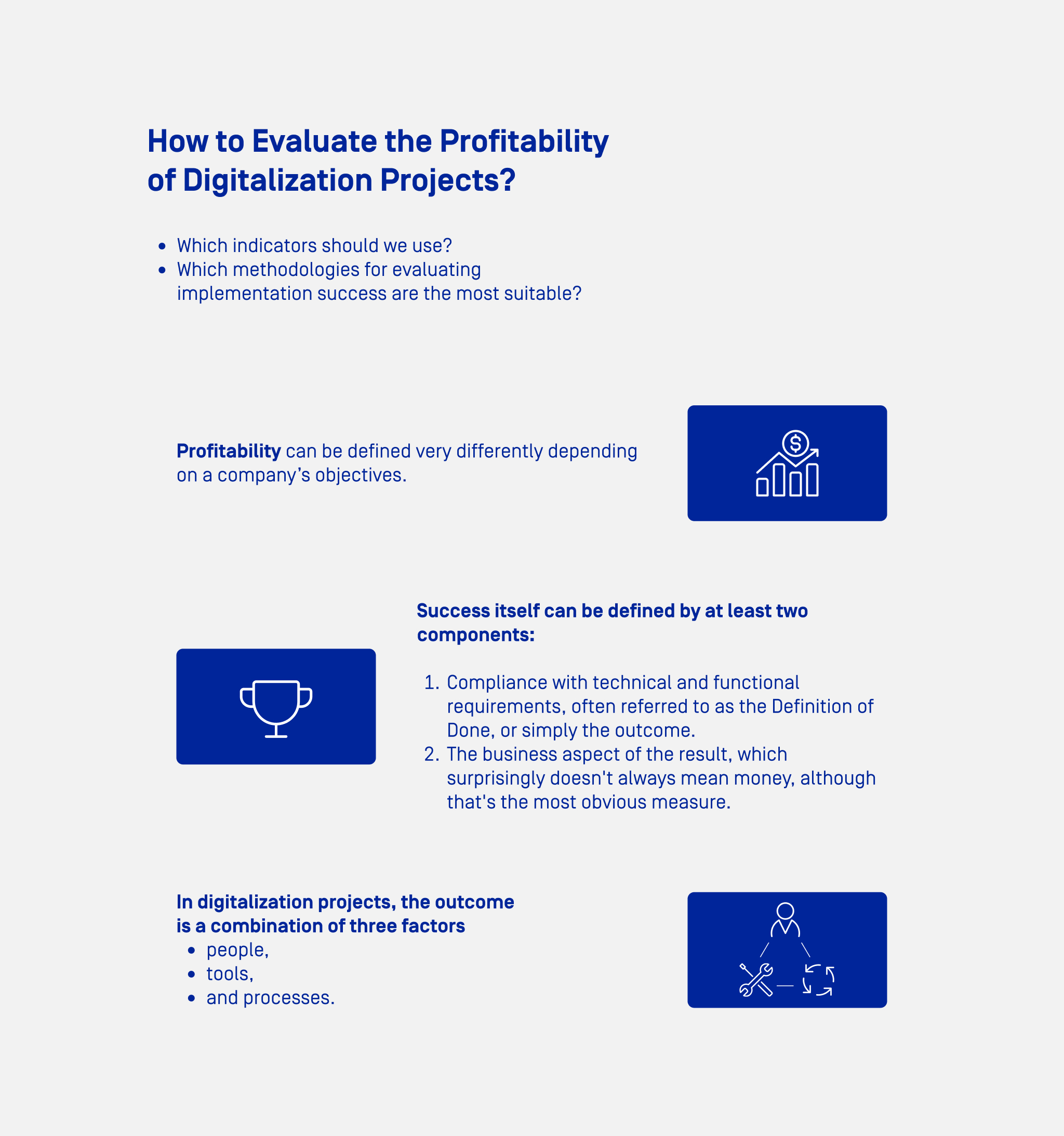
Let’s start by acknowledging that profitability is an indicator that can be defined very differently, depending on a company’s objectives.
Success itself can be defined by at least two components:
Compliance with technical and functional requirements, often referred to as the Definition of Done, or simply the outcome.
The business aspect of the result, which surprisingly doesn’t always mean money, although that’s the most obvious measure.
In digitalization projects, the outcome is always a combination of three factors: people, tools, and processes.
For instance, let’s consider a production efficiency measurement system based on OEE. The system alone cannot ensure an increase in this indicator, not even by 0.5%. However, if properly implemented and thought through, it can provide valuable insights into efficiency, potential improvements, structural issues, and causes of losses. But it won’t make any changes by itself. Only the decisions made with this data can generate tangible results.
Implementing the system should be one part of a planned change, which could also include employee training in methodologies like Lean, TPM, SMED, and organizational changes. Only by considering all these actions can we evaluate the project’s effectiveness. However, it must be noted that the results are rarely immediate. Like any change, this one also involves all phases from denial, resistance, exploration, to acceptance and adaptation.
The time required for this process depends on the organization’s ability to adopt new technology, which in turn can be accelerated by managerial involvement (especially from line managers), extensive training, and, most importantly, demonstrating how real problems are being solved. Undoubtedly, problem solving is far more convincing than potential opportunities and benefits.
Let’s not be afraid to admit that during the change process, efficiency may sometimes decrease, or employee resistance may slow things down or even lead to sabotage. Change triggers extreme emotions, including fear, so addressing employees’ concerns during Gemba walks is as important as fostering a sense of purpose and meaning.
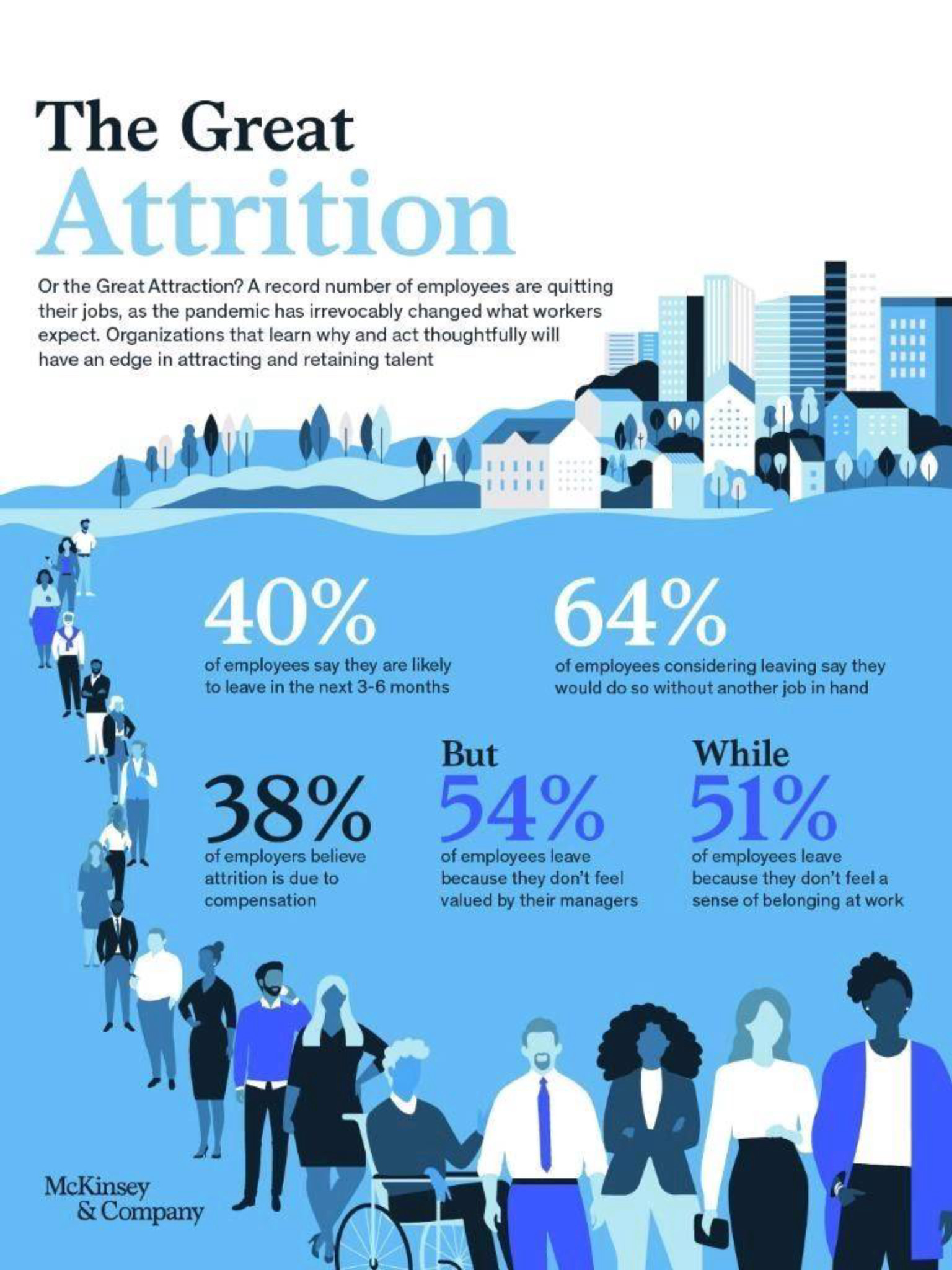
Both domestic and international employee satisfaction surveys show that having a sense of purpose and being able to solve problems are among employees’ most critical needs. We’re currently in a period defined by McKinsey as the Great Attrition, with large numbers of employees leaving their companies. Therefore, building commitment and involvement might be the most significant, though unmeasurable, result of our initiatives.
Board Member, Head of Product and Digital Consulting
At ImFactory, he also acts as a Project Manager and consultant. He is responsible for shaping the vision for the development of IT systems in production environments. He supports companies in assessing their digital maturity and helps them plan their digital transformation.
A graduate of the Gdańsk University of Technology, he completed a degree in Automation and Robotics and completed postgraduate Lean Six Sigma Black Belt studies. He is the author of numerous publications under the #EffectiveDigitization banner. He shares his knowledge on production efficiency, digital transformation, MES/MOM systems, and digitalization roadmaps.
He combines technical knowledge with an understanding of business processes, effectively supporting companies on their journey to the Digital Factory.
Michał Zieliński’s articles and webinars are available in the ImFactory Knowledge Base.
See also
Want to learn more? Visit our Knowledge Base, where you'll find articles and webinars by experts to expand your knowledge.
Check if Digital Transformation is the Answer to Your Company's Needs
Free Consultation
Thank you for submitting the form.
Our account manager will contact you within 1 business day to learn more about your challenges and schedule an appointment with the consultant best suited to your needs.
While you’re waiting, we encourage you to go to ImFactory’s Knowledge Base, where you’ll find many interesting webinars, articles and case studies that will introduce you to the world of Digital Transformation