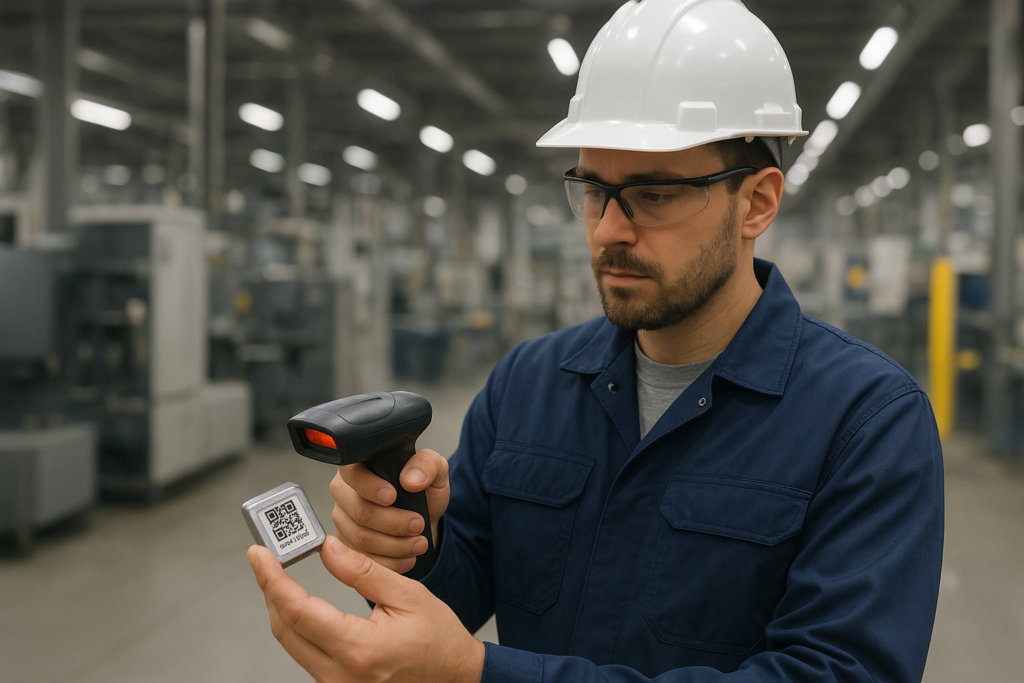
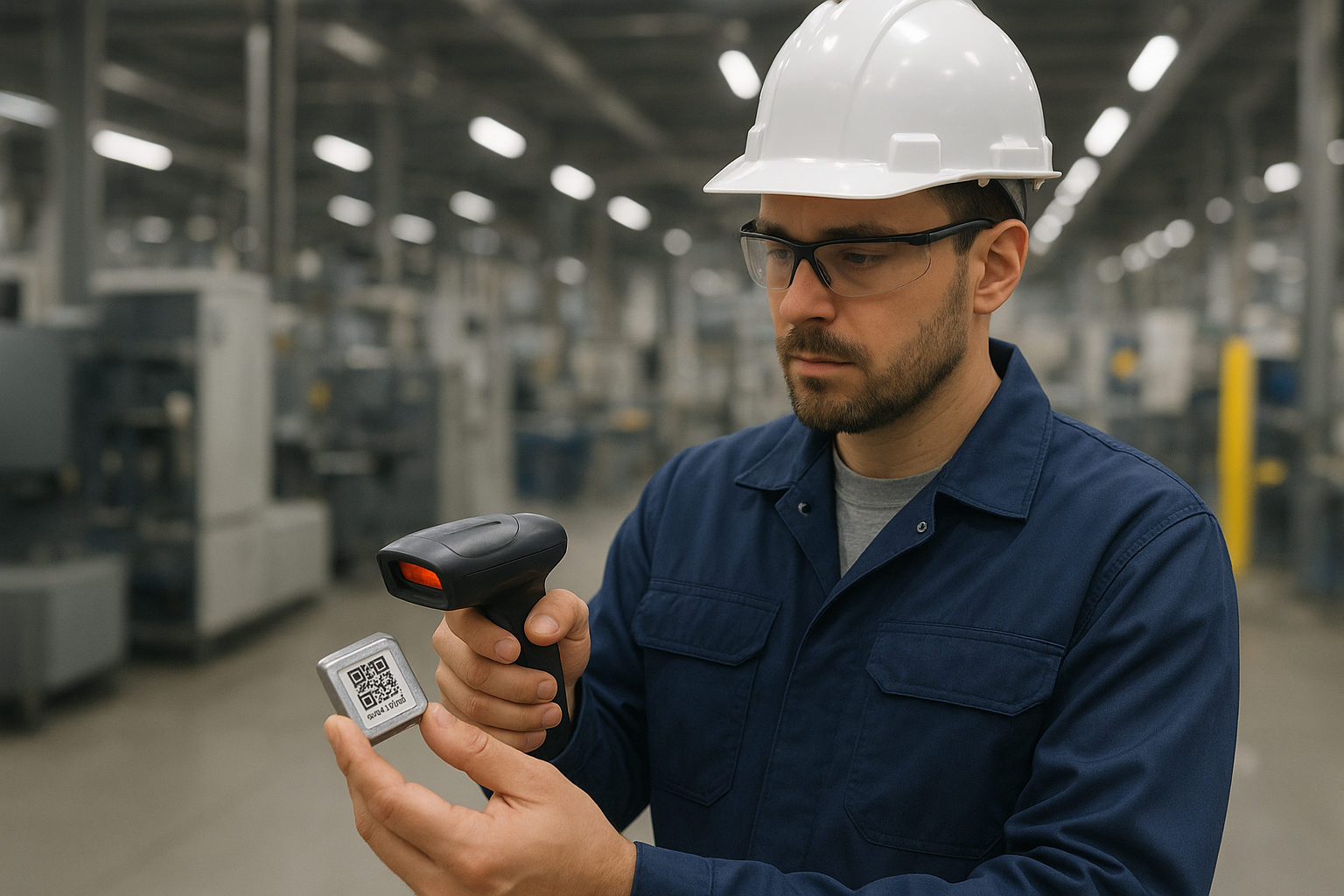
What Is and What Is Not Traceability? The Most Common Myths
Growing quality requirements, increasingly stringent legal regulations, and customer expectations regarding production transparency mean that traceability is becoming one of the pillars of modern production management. Despite this, many misconceptions still surround it. Companies often invest in it while only partially implementing the idea of product traceability.
Production Under Scrutiny: What Traceability Tells Us
What exactly is traceability, and what can it offer to manufacturing companies? What areas of the process does it cover, and what are its types? Is it merely a regulatory requirement – or a practical tool supporting production efficiency and safety?
Digital Technologies and Strategies for Increasing Energy Efficiency
We live in an era of spectacular changes — Technological, Economic, and Business-related. Changes we can prepare for, and those that surprise us day by day.
Boost Productivity with AI. ImFactory and Braincube
Your manufacturing data may hold far greater potential than you think. Find out how to unlock it and genuinely boost efficiency — without costly investments in new infrastructure.
Production Scheduling as a tool for improving company profitability
What benefits does a Schedule offer a manufacturing company? It certainly streamlines daily work, helps organize individual tasks and meet deadlines. That’s obvious. But it can also bring many more benefits. A well-prepared schedule allows for optimal utilization of available resources. And therein lies the key to improving a company’s profitability.
Millions of items annually, hundreds of formulas, continuous product launches, adherence to strict quality standards and GMP requirements, multiple legal obligations – this is the reality of many FMCG companies. In such an environment, traceability is no longer a nice-to-have addition, but a necessity. Moreover, its dependable performance is the condition for a business’s stable growth.
The production process in the FMCG industry, and particularly cosmetics manufacturing, is a large-scale, high-paced operation. At OnlyBio.life, this is strictly two-stage. First, the cosmetic base is manufactured under the conditions of enhanced cleanliness (in compliance with GMP and ISO standards). Then, the packaging process takes place: filling, labeling, and packing the products. Each stage generates different risks, quality requirements, and datasets. The greatest challenge in this environment is synchronizing information between cosmetic base manufacturing, packaging, and logistics.
The scale of operations at OnlyBio.life began to grow faster than the company’s ability to manage data. The model based on paper documentation and spreadsheets ceased to provide adequate control – the company lacked a single source of truth, which meant production, warehouse, purchasing, and planning departments were all working with different versions of reality. As a result, data reached decision-makers with a delay, often only after an operation had been completed, drastically reducing the ability to respond in real time. Daily operations and process supervision relied mainly on paper documentation and spreadsheets. The lack of timely information was another significant shortcoming.
Diagnosis of the actual state revealed that the main issue blocking business growth was not production itself, but the lack of available and reliable data. Using ERP for production and intralogistics was also not an optimal solution. ERP excels at supporting management-level functions within an enterprise, but proved inadequate at the operational level.
From Digitization to Digital Transformation
From the very beginning, our assumption at OnlyBio.life was that successful change is not about technology implementation alone – it requires organizing the way the company operates. It proved crucial to fully grasp the difference between digitization (transferring data from paper documentation to systems), digitalization (connecting data and processes), and digital transformation – a real shift in thinking and decision-making, based on integrated data.
This is why the implementation process didn’t begin with the hasty installation of MES software, but with going to the shop floor and analyzing the actual flow of operations in gemba – the place where the process is conducted. ImFactory, our implementation partner, provided invaluable support in reconciling our assumptions with the actual work environment, full of everyday challenges. Thanks to this approach, the organization could be confident that the IT system would be implemented as a support for people and well-defined processes, not as an end in itself.
Implementation Step by Step
The implementation process at OnlyBio.life was conducted in stages and based on a clearly defined sequence of activities. Maintaining the right order was essential – we were aware that skipping any stage would mean failing to achieve the intended goal.
Step 1: Process Mapping
The first step was understanding the actual course of operations and identifying the points where data is generated. Mapping encompassed the entire process – from planning, through purchasing and production, to logistics. The goal was to separate critical data from redundant information and identify bottlenecks that were hindering data flow and operational decision-making. This led us to one of the project’s most pivotal moments: selecting key users for each area. These were the people who modeled the processes and operations. This approach required thorough analysis and balanced judgement, but it was essential. It allowed us to base our work not only on the views of managers, but above all on the input of employees who, through their daily work, best understand how operations and processes actually function.
Step 2: The Master Data Foundation
Master data is the backbone of digitalization, ensuring data consistency across all systems and processes. This was the most demanding, and arguably the most critical, stage of the entire transformation. It involved the absolute centralization of information on products, formulas, raw materials, and processes within the ERP system. From an IT architecture standpoint, without this stage, all subsequent steps would be pointless – no execution system will function correctly on inconsistent data. This is where, despite the enormous workload involved, we built the solid foundation for all future automation.
Step 3: Pilot in the Key Area
We deliberately started the implementation with the packaging process. The choice was not arbitrary: this is the heart of a manufacturing company, the area of high operational intensity and convergence of all problems related to material flow, data capture, and logistics-production synchronization. This is where the real lifeblood of company data flows. The pilot covered the logistics buffer and two production lines. Limiting the scope allowed us to test the system on a real slice of operations, without risking destabilization of the entire facility.
Step 4: Gradual Scaling
Only after positive verification of the pilot stage did we begin gradually expanding the solution. Scaling proceeded in two directions: vertically (towards the warehouse and production planning) and horizontally (by adding further production lines). Each stage was rigorously adapted to operational realities and consulted with the direct users. This approach helped avoid a common implementation pitfall: building a system disconnected from production reality. The findings from this stage ultimately confirmed that the greatest obstacle had not been production itself, but the lack of consistent data.
Digital Supply Chain as an Industry 4.0 Component
The result of the implementation was not merely launching an MES, but building a coherent digital supply chain that integrated critical areas of the organization. The digital supply chain is not a single system, but an architecture integrating data, processes, and people in an end-to-end model.
In practice, this means connecting planning, purchasing, production, and logistics into a single data flow system, based on centralized master data managed in the ERP. Master data is key here. Within this integrated structure, MES serves as the execution layer, responsible for collecting operational data and linking it to the actual progress of production.
Every operational event – from the receiving of raw materials, through production, to the release of finished goods – is recorded and consistently accessible across the entire organization. Adapting this management model made it possible to synchronize activities across areas, eliminate information delays, and make decisions based on live data rather than its historical version.
This fully integrated digital supply chain is a key component of Industry 4.0. The implementation of this concept brings with it advanced technologies that generate enormous amounts of data. In line with the DIKW hierarchy (Data, Information, Knowledge, Wisdom), raw signals are transformed into useful information, and then into reliable knowledge. On that basis, the organization makes strategic decisions in real time, achieving the operational wisdom indispensable in an automated environment.
Traceability as the End Result
Many manufacturing companies treat the implementation of full traceability as a separate, complex IT project. In our case, it was not pursued as an independent goal, but emerged as a natural result of data organization, system integration, and process automation.
From an architectural standpoint, traceability remained at the level of the central ERP system. However, through the continuous data stream flowing in from MES, the module is fed in a semi-automated manner, ultimately eliminating the need to manually and laboriously reconcile data from various sources. The resulting architecture and data flow made it possible to:
quickly reconstruct the product’s full traceability path,
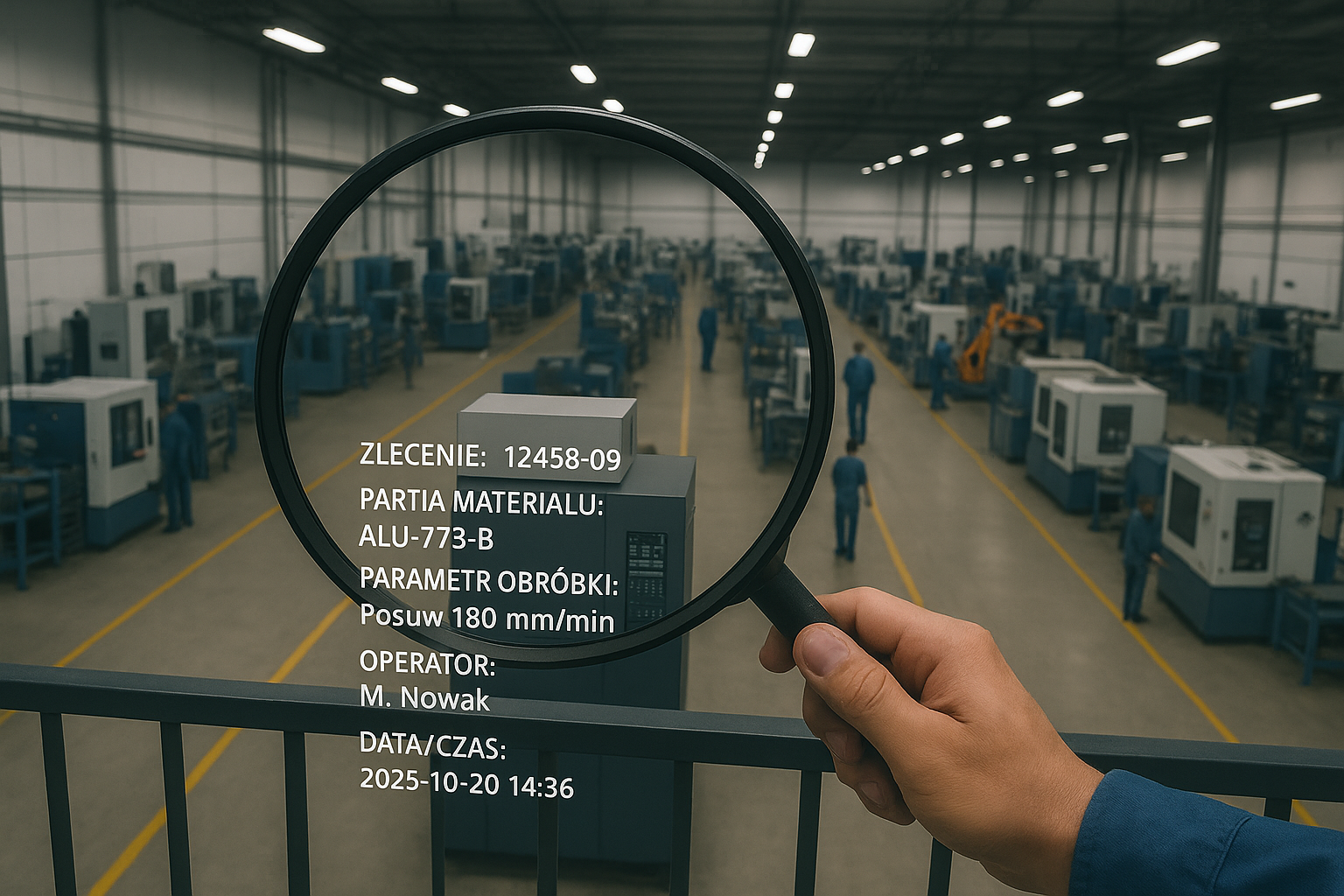
accurately link a batch to a specific order,
gain real-time access to process parameters.
For the management and engineering staff, this translated directly into a significant reduction in response time, minimized risk of errors, and considerably lowered stress levels during audits.
Conclusion
The story of OnlyBio.life proves that the transition from paper reports to a digital supply chain is not purely a technological project, but a profound process of organizing data and the way a company operates. MES solutions cannot solve operational problems on the shop floor by themselves. They begin to work properly only once they are grounded in consistent data and precisely defined processes. Implementing software in a disorganized environment only replicates the existing chaos in digital form.
The key to success is building a solid master data foundation and integrating planning, production, and logistics. Only such an architecture makes it possible to achieve full traceability and shift from a management model based on intuition and historical data to a decision-making model fueled by real-time data. It is in this paradigm shift that the real business, operational, and quality value of the entire transformation lies.
About the company:
OnlyBio.life is a Polish manufacturer of natural cosmetics operating in the FMCG industry. The company is part of Hub.Tech Group – one of the leaders in the biotechnology sector. The group was formed through the transformation of Boruta-Zachem, a national powerhouse in household chemicals and biosurfactant-based cosmetic products.
Supply Chain Manager | Digital Transformation Expert
A Digital Supply Chain (DSC) and Industry 4.0 expert with over 20 years of experience in management positions in logistics and production. He specializes in the architecture and implementation of strategies that combine physical supply chain operations with the potential of digital innovation. He currently serves as Logistics and Digitalization Manager at OnlyBio.life, where he is responsible for end-to-end projects – from system implementation and Industry 4.0-driven automation to the construction and reorganization of logistics facilities. His goal is to create durable and scalable solutions that deliver tangible operational and business benefits.
See also
Want to learn more? Visit our Knowledge Base, where you'll find articles and webinars by experts to expand your knowledge.
Check if Digital Transformation is the Answer to Your Company's Needs
Free Consultation
Thank you for submitting the form.
Our account manager will contact you within 1 business day to learn more about your challenges and schedule an appointment with the consultant best suited to your needs.
While you’re waiting, we encourage you to go to ImFactory’s Knowledge Base, where you’ll find many interesting webinars, articles and case studies that will introduce you to the world of Digital Transformation